 Home > About Us > News > Industry News > Finding the Right replacement air spring supplier: What Buyers Should Check Before Ordering
 When an air spring fails, finding a replacement that fits correctly is only the first step. Distributors, repair workshops, fleet operators, and vehicle parts wholesalers also need to consider product consistency, application compatibility, and the reliability of future supply. Choosing the wrong component can lead to installation difficulties, additional downtime, and repeated maintenance work.
A dependable replacement air spring supplier should understand these requirements and help buyers identify products that match the original suspension configuration. For commercial vehicles, passenger cars, trailers, and industrial equipment, the selection process needs to go beyond appearance or a general product description.
VKNTECH, the air suspension brand of Guangzhou Viking Auto Parts Co., Ltd., manufactures air springs and related suspension components for automotive and industrial applications. Understanding the factors involved in replacement sourcing can help buyers make better purchasing decisions and establish a more consistent supply process.
An air spring uses a reinforced rubber bellows and supporting components to provide load support within an air suspension system. Its dimensions, working height, mounting structure, and operating characteristics must correspond to the equipment in which it is installed.
Two air springs may look similar but have different mounting hole patterns, piston shapes, air inlet positions, or overall dimensions. These differences can prevent correct installation or affect suspension operation.
When evaluating a replacement air spring supplier, buyers should confirm whether the supplier can identify products using original equipment numbers, cross-reference numbers, technical drawings, or application information.
Useful identification details include:
Original air spring part number or reference number
Vehicle make, model, and suspension configuration
Overall height and bellows diameter
Top plate and bottom piston design
Mounting hole spacing and stud arrangement
Air inlet position and connection requirements
Providing these details before ordering reduces uncertainty and makes it easier to distinguish a suitable replacement from a product that merely looks compatible.
Air springs serve a range of applications, and their construction varies according to installation space, movement requirements, and load conditions. A supplier's product range should therefore be evaluated in relation to the buyer's actual market and customer requirements.
Commercial vehicles operate under changing loads, repeated suspension movement, and varying road conditions. Truck and trailer air springs must match the suspension system's mounting arrangement and intended operating range.
For distributors and fleet maintenance businesses, accurate cross-reference information is particularly useful when sourcing replacement parts for different vehicle models. Maintaining a record of frequently ordered part numbers can also simplify repeat purchasing.
Passenger vehicles may use application-specific air springs designed around particular suspension layouts. Compatibility depends on the vehicle model and the original component specification, not simply the external shape of the air spring.
Buyers should verify the reference number and mounting configuration before placing an order, especially when supplying replacement components for multiple vehicle brands.
Industrial equipment may use air springs for load support, vibration isolation, or controlled movement. These applications can have requirements that differ significantly from automotive suspension systems.
Working height, available installation space, load conditions, operating pressure, and movement range are important selection factors. A replacement air spring supplier serving both vehicle and industrial markets should distinguish between these requirements instead of treating all air springs as interchangeable products.
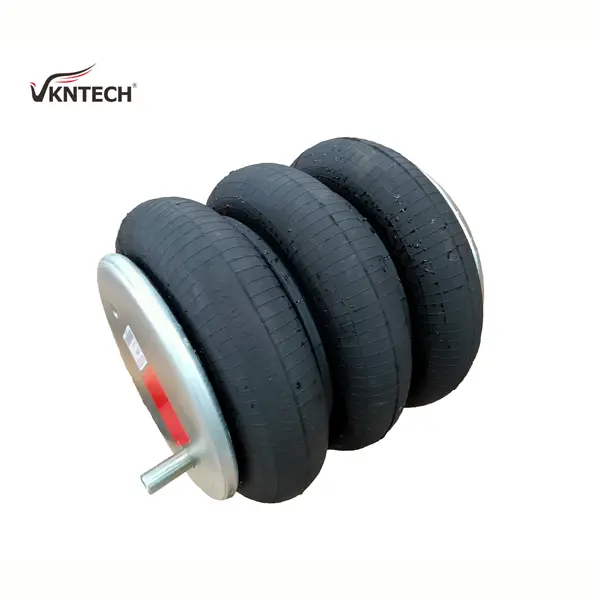
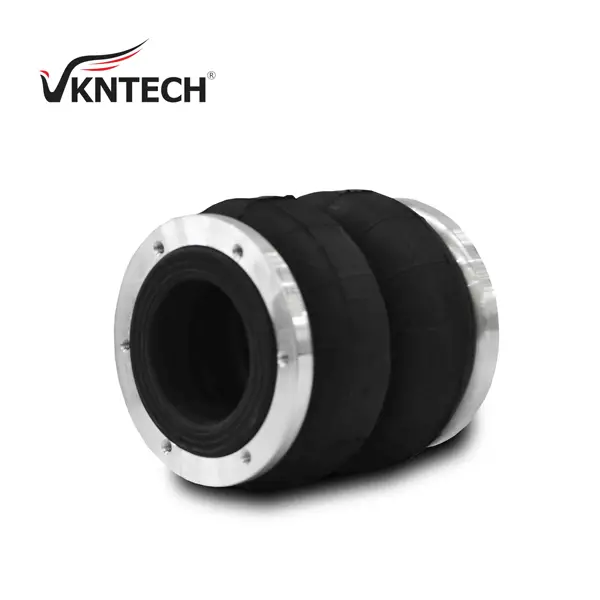
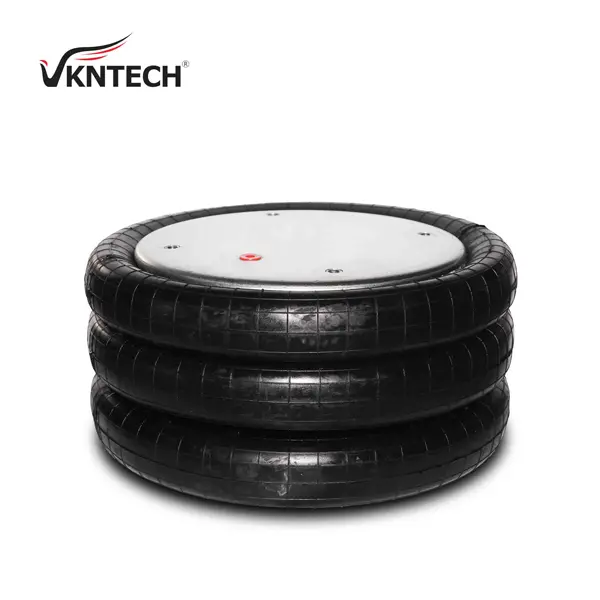
VKNTECH offers air spring products covering commercial vehicles, passenger cars, and industrial applications, including single-, double-, and triple-convoluted designs. Buyers should confirm the specific product configuration against the intended application.
For businesses purchasing air springs regularly, one successful order is not enough. Replacement components must continue to meet the required specifications across subsequent batches.
Dimensional accuracy affects installation fit. Rubber compound consistency and reinforcement construction influence how the bellows responds to repeated pressure changes and movement. The quality of metal components, sealing surfaces, and assembled connections also matters.
When comparing suppliers, buyers should ask about the inspection procedures relevant to their products. Depending on the component, these may include dimensional checks, visual inspection, air leakage testing, and other applicable performance or production checks.
It is also worth considering how the supplier identifies and tracks different product configurations. Clear part numbers, drawings, and product records help reduce confusion when several similar models are purchased for different applications.
A capable replacement air spring supplier should be able to communicate the specifications of the proposed component and explain how buyers can verify compatibility before installation.
Product compatibility is essential, but commercial buyers have additional concerns when building a long-term sourcing relationship.
Product range: A supplier with multiple air spring categories may help distributors source different applications through one established channel. However, the actual range should be checked against the products their customers require.
Repeat-order consistency: Stable specifications and clear product identification make it easier to reorder the same component without repeating the entire identification process.
Technical communication: When an original part number is unavailable, a supplier's ability to review dimensions, photographs, or drawings can help narrow down the options.
Order planning: Buyers should discuss production lead times, availability, minimum order requirements, and shipping arrangements directly with the supplier rather than assuming these conditions are identical across product categories.
Quality documentation: Relevant product specifications and inspection records help purchasing teams evaluate whether a component meets their internal requirements.
For wholesalers and aftermarket distributors, these factors influence how efficiently replacement parts can be sourced, stocked, and supplied to customers.
Several avoidable mistakes can complicate the replacement process.
The first is selecting a product based only on photographs. Similar-looking air springs may have different mounting dimensions or operating characteristics.
The second is ignoring the reason for the original failure. Rubber deterioration, abrasion, external damage, incorrect installation, or unsuitable operating conditions may contribute to a failure. Replacing the air spring without addressing an underlying problem can lead to another premature failure.
The third is overlooking working height and suspension travel. A replacement must suit the intended operating range rather than simply fitting into the available space.
Finally, some buyers focus exclusively on the initial order and overlook future availability, product identification, and repeat-order requirements. These details become increasingly important for businesses managing multiple vehicle applications.
Selecting a replacement air spring supplier is ultimately about matching technical requirements with dependable manufacturing and supply arrangements.
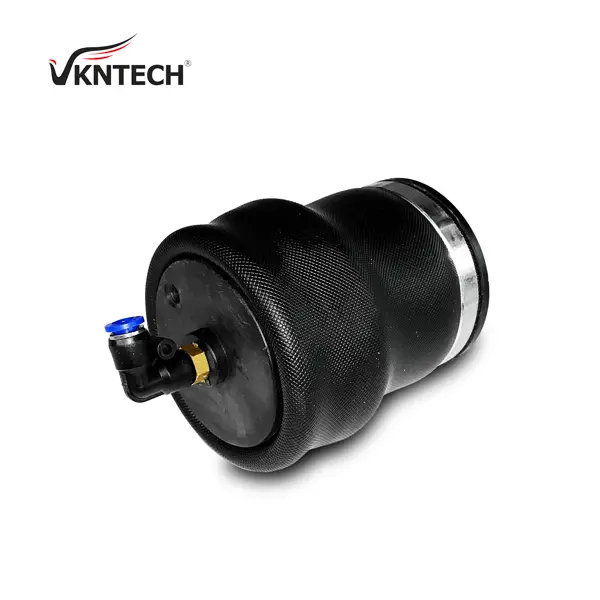
VKNTECH focuses on air springs, shock absorbers, and air compressors for automotive and related applications. Its product range includes truck air springs, trailer air springs, cab air springs, passenger car air suspension products, and industrial air springs.
For buyers evaluating replacement options, the most useful starting point is the original part number or a complete set of application details. Vehicle information, mounting dimensions, product photographs, and technical drawings can help establish which configuration should be considered.
Before confirming an order, verify the proposed product's fitment, mounting structure, working dimensions, and relevant specifications. Distributors should also clarify repeat-order arrangements and documentation requirements.
A suitable replacement air spring supplier does more than provide a component that appears to fit. The supplier should help buyers identify the correct application, communicate product specifications clearly, and support a purchasing process that reduces compatibility risks. For VKNTECH customers, a specification-based approach provides a practical foundation for sourcing air springs for vehicle maintenance, aftermarket distribution, and industrial applications.


 en
en
 English
 Vietnamese
 Spanish
 Thai
Thai Portuguese
 Korean
 Russian
 French
 German
 Polish
 Arabic
 Indonesian
 Burmese