 Home > About Us > News > Industry News > Heavy Duty Air Spring Supplier: What Really Matters in Sourcing?
 Choosing the right air spring is not simply a matter of matching a part by appearance. In heavy-duty vehicles and industrial equipment, an air spring has to work under repeated loads, vibration, changing operating conditions, and sometimes demanding environmental conditions. The supplier behind the component can therefore have a direct influence on product consistency and replacement compatibility.
For buyers looking for a heavy duty air spring supplier, the important questions usually involve construction, dimensions, mounting configuration, material selection, application compatibility, and manufacturing consistency. Understanding these factors can make sourcing more efficient and reduce the risk of selecting a component that does not perform as expected.
At VKNTECH, air spring products are developed for different vehicle and industrial applications, with product selection based on the actual requirements of the suspension or support system.
A heavy-duty air spring uses compressed air inside a flexible reinforced bellows to support a load and provide controlled suspension or isolation.
Compared with conventional metal springs, an air spring can provide variable load-support characteristics depending on internal air pressure and working height. This makes air springs useful in commercial vehicles, trailers, buses, cabins, seats, industrial equipment, and other applications where vibration control or suspension movement is required.
The term "heavy duty" should not be interpreted as a universal specification. An air spring suitable for a truck suspension may have very different dimensions and mounting requirements from one used for industrial vibration isolation.
Therefore, when searching for a heavy duty air spring supplier, buyers should start with the application instead of relying only on the product name.
Air springs are used in many different operating environments.
Commercial vehicles may experience changing loads, road vibration, repeated suspension movement, and exposure to water, dust, oil, and other contaminants. Industrial applications can involve machinery vibration, repetitive movement, lifting requirements, or controlled isolation.
These differences affect air spring selection.
Important factors can include:
A suitable heavy duty air spring supplier should be able to evaluate these factors rather than recommending a product based solely on external appearance.
An air spring is more than a rubber bellows.
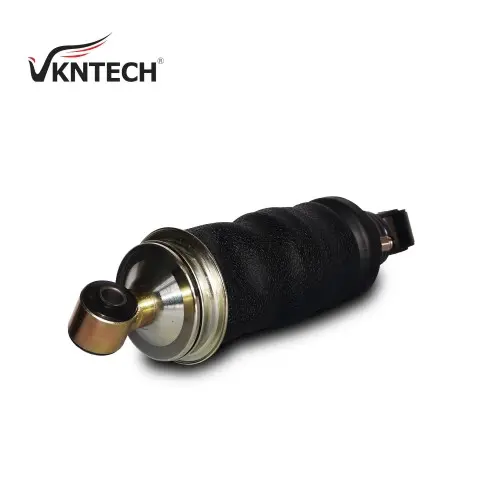
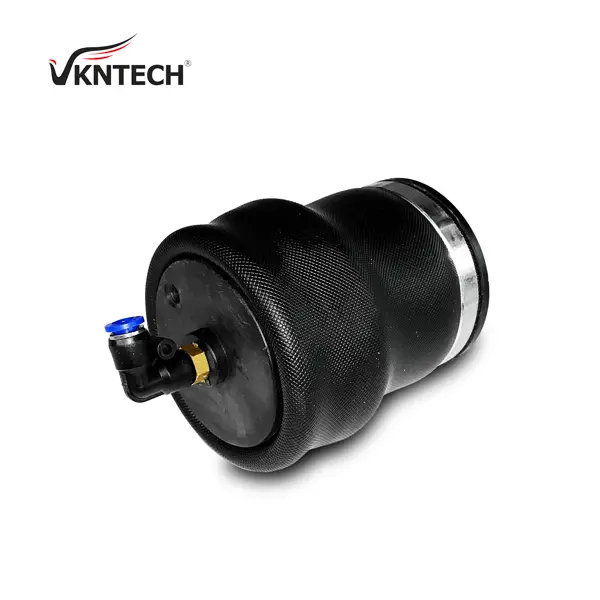
The complete assembly may include reinforced rubber layers, mounting plates, studs, air inlets, pistons, and other components depending on the design.
The bellows must withstand repeated deformation while maintaining the required air-tightness. Reinforcement within the rubber structure contributes to its ability to handle pressure and repeated movement.
Mounting components also require accurate dimensions because they determine how the air spring connects to the vehicle or equipment.
For this reason, evaluating a heavy duty air spring supplier should include attention to the complete assembly rather than focusing only on the rubber body.
Correct dimensions are essential for installation and suspension geometry.
A replacement air spring may look similar to the original but still be unsuitable if the working height, outside diameter, mounting hole pattern, or air inlet position differs.
Typical specifications that should be checked include:
When purchasing from a heavy duty air spring supplier, providing an original part number or detailed drawing can make identification more reliable.
For custom or OEM applications, technical drawings are particularly useful because the air spring may need to fit within a specific mechanical structure.
The rubber compound and reinforcement structure have an important influence on air spring performance.
Different applications can expose the component to different temperatures, moisture levels, chemicals, road debris, and mechanical stresses. Material selection should therefore be based on the actual operating environment.
A component used on a commercial vehicle may require resistance to outdoor exposure and continuous road vibration. An industrial air spring may operate indoors but experience frequent mechanical cycling or contact with specific substances.
For a heavy duty air spring supplier, understanding these differences is important when determining the appropriate construction and material combination.
Not all air springs use the same bellows structure.
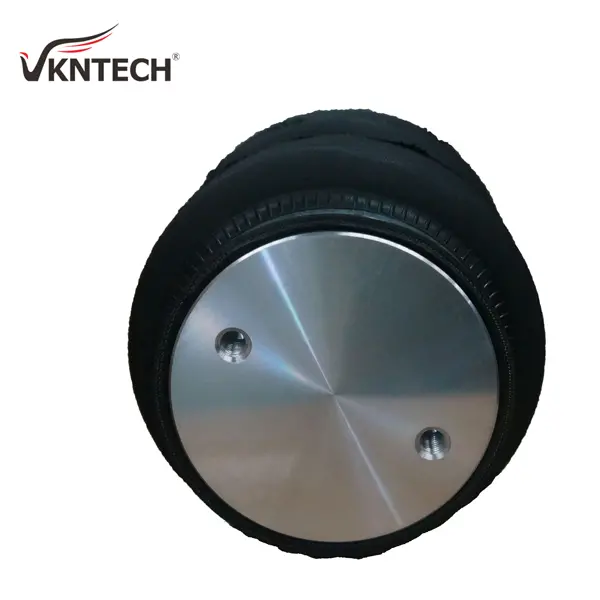
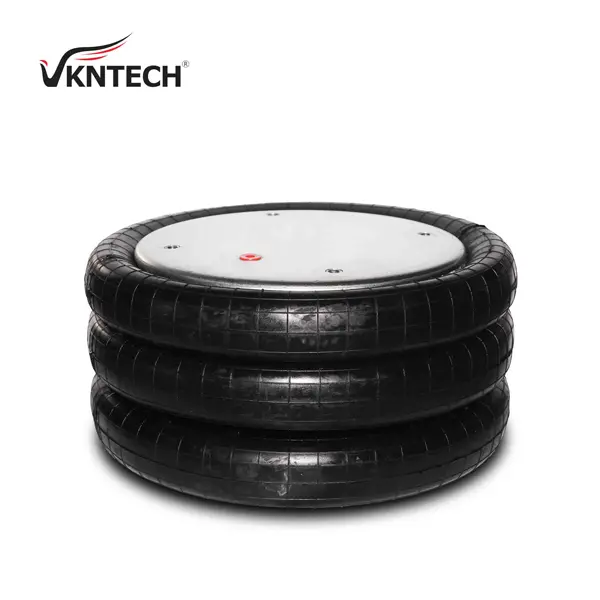
Convoluted air springs are available in single-, double-, and triple-convolution configurations. Their construction can provide different working characteristics and installation possibilities.
They are used in various industrial and vehicle-related applications where a particular stroke, flexibility, or compact installation arrangement is required.
Other air spring configurations can also be selected according to equipment requirements.
This is one reason why buyers should describe the application when contacting a heavy duty air spring supplier. The correct design depends on how the component will be installed and what movement it needs to accommodate.
Replacement sourcing can be more complicated than simply finding a similar-looking component.
The original part number is often a useful starting point, but dimensional verification remains important. Differences in mounting configuration, height, diameter, or air connection can prevent a replacement from fitting correctly.
For fleet maintenance and equipment servicing, consistent replacement specifications are especially important. A component that fits one unit but differs slightly from the original specification can create installation or operating issues.
A reliable heavy duty air spring supplier should therefore be able to work with part numbers, drawings, samples, and application information when identifying replacement products.
OEM projects require more detailed information than standard replacement orders.
Buyers should ideally provide the following:
This information gives the manufacturer a practical basis for determining the required product configuration.
At VKNTECH, application information can be used to support product selection across commercial vehicle, industrial, and other air suspension applications.
For distributors, vehicle manufacturers, and equipment producers, supplier selection should extend beyond a single successful order.
Consistent dimensions, stable material specifications, reliable production processes, and clear technical communication become increasingly important when components are purchased repeatedly.
A broad product range can also be useful because different applications may require different air spring designs. VKNTECH provides air spring solutions covering commercial vehicle applications, industrial equipment, convoluted air springs, passenger vehicle air suspension, and related air suspension components.
For buyers comparing a heavy duty air spring supplier, these practical capabilities can be more meaningful than general claims about product quality.
Ultimately, the right air spring is the one that matches the actual mechanical and environmental requirements of the application. By evaluating dimensions, construction, materials, mounting configuration, working conditions, and supplier consistency together, buyers can make a more informed decision and reduce compatibility problems during installation.


 en
en
 English
 Vietnamese
 Spanish
 Thai
Thai Portuguese
 Korean
 Russian
 French
 German
 Polish
 Arabic
 Indonesian
 Burmese