 Home > About Us > News > Industry News > Air Suspension Replacement Parts: What Should You Check First?
 Air suspension systems play an important role in maintaining ride height, load support, and driving stability for commercial vehicles. When an air spring or related component becomes worn or damaged, replacing the affected component can help restore the suspension system to its intended operating condition.
However, choosing air suspension replacement parts is not simply a matter of finding a component with a similar appearance. Differences in dimensions, mounting structure, working height, rubber construction, and vehicle application can affect whether a replacement is suitable.
For distributors, repair shops, fleet maintenance teams, and vehicle parts buyers, a specification-based approach is a more reliable way to identify the right replacement.
Air suspension replacement parts are components used to repair or restore an existing air suspension system.
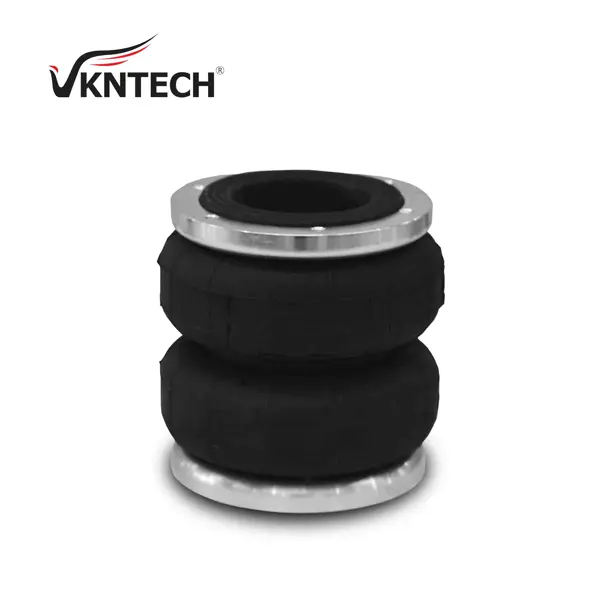
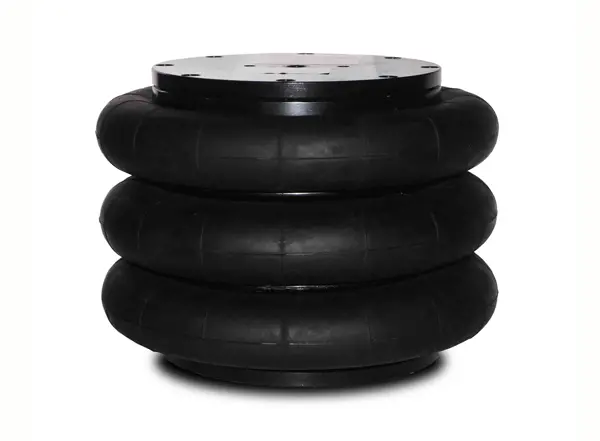
Depending on the vehicle and suspension design, these parts may include air springs, air bags, bellows, pistons, top plates, mounting components, and related accessories.
An air spring normally consists of a flexible rubber bellows combined with structural components that allow compressed air to support the vehicle load. When one part reaches the end of its service life, the appropriate replacement depends on the construction of the original suspension assembly.
The correct replacement should match the vehicle's suspension design rather than being selected only by general product type.
Air suspension components that look similar may have different mounting dimensions or operating characteristics.
Differences can occur in:
For air suspension replacement parts, these details directly affect installation compatibility.
Before ordering a replacement, buyers should ideally identify the original part number. If that information is unavailable, vehicle details, suspension information, dimensions, and clear product photos can help narrow down the correct configuration.
An air spring is more than a rubber bellows.
The bellows provides the flexible air chamber, while the piston, top plate, mounting hardware, and air connection support the complete assembly.
When a failure occurs, it is useful to determine which part is responsible.
For example, visible cracking or air leakage in the bellows may indicate that the complete air spring requires replacement. Damage to a mounting component may require a different repair approach.
This distinction is important when sourcing air suspension replacement parts, particularly for maintenance operations involving multiple vehicle models.
The rubber bellows is exposed to repeated compression and extension throughout normal suspension operation.
It may also encounter road debris, moisture, temperature changes, abrasion, and other environmental conditions.
Common warning signs include:
If these conditions appear, the air spring should be inspected rather than continuing to operate without investigation.
When evaluating air suspension replacement parts, the condition of the original bellows can also provide useful information about the reason for failure.
Air suspension systems are used across trucks, trailers, buses, and other commercial vehicles, but their configurations are not identical.
Different vehicles can have different:
Therefore, air suspension replacement parts should be selected according to the actual vehicle and suspension application.
A component suitable for one vehicle platform should not automatically be assumed to fit another vehicle simply because the external appearance is similar.
Dimensional compatibility is one of the most important aspects of replacement-part selection.
Measurements may include the air spring's height, diameter, mounting-hole spacing, piston dimensions, and air inlet position.
For air suspension replacement parts, dimensional drawings are particularly useful when the original identification number is unavailable.
However, dimensions should always be considered together with the vehicle application. Two air springs can have similar dimensions but different mounting arrangements or operating characteristics.
This is why product identification should combine dimensional information with vehicle and suspension data.
Air springs operate within a specific range of height and pressure.
The working height affects how the air spring responds as the suspension moves. If the replacement component does not correspond to the intended operating range, suspension performance may be affected.
When choosing air suspension replacement parts, buyers should therefore consider the original working height and suspension travel rather than checking only the compressed and extended dimensions.
This is particularly important for commercial vehicles carrying different loads during regular operation.
An air spring experiences repeated pressure cycles and mechanical movement throughout its service life.
The rubber compound, reinforcement layers, metal components, and manufacturing process all contribute to the overall construction.
When comparing air suspension replacement parts, buyers can review factors such as:
These factors provide a more useful basis for evaluating replacement components than appearance alone.
Air springs can eventually require replacement because of normal aging, operating conditions, or external damage.
Typical contributing factors include:
Rubber aging: Repeated exposure to environmental conditions can gradually affect flexible rubber components.
Repeated pressure cycles: Continuous suspension movement places repeated stress on the bellows.
Road debris: Stones, dirt, and other materials can damage exposed rubber surfaces.
Abrasion: Contact with surrounding components can cause localized wear.
Incorrect ride height: Improper suspension settings can affect air spring operation.
Overloading: Operating beyond the intended load conditions can place additional stress on suspension components.
Installation problems: Incorrect mounting can affect the position and movement of the air spring.
Understanding the cause of failure is important because replacing the component without addressing an underlying issue may lead to another failure.
A supplier can identify air suspension replacement parts more accurately when the buyer provides detailed technical information.
Useful information includes:
If the original part number is unavailable, a technical drawing with key dimensions can be particularly helpful.
For distributors handling multiple applications, maintaining accurate product identification records can also make future replacement sourcing more efficient.
VKNTECH focuses on air suspension products and related components for vehicle applications.
Its product range is intended for different air suspension requirements, allowing buyers to evaluate components according to vehicle type, suspension configuration, dimensions, and replacement needs.
For customers sourcing air suspension replacement parts, the key consideration should be matching the replacement component with the original application.
A technically appropriate replacement should correspond to the required mounting structure, dimensions, working conditions, and suspension configuration rather than being selected purely by visual similarity.
A practical selection process can follow several steps.
First, identify the vehicle and suspension system. Then locate the original part number if possible. If the part number is unavailable, record the important dimensions and mounting details.
Next, compare the replacement component's construction and specifications with the original requirements.
Finally, confirm installation compatibility before placing a larger order.
For fleet operators and distributors, this process can reduce the risk of receiving components that require modification or cannot be installed as expected.
Choosing air suspension replacement parts requires attention to more than the basic product category.
Vehicle application, dimensions, mounting structure, working height, rubber construction, and operating conditions all influence whether a replacement component is appropriate.
VKNTECH provides air suspension products for different vehicle applications, giving buyers a basis for evaluating replacement requirements according to their specific suspension systems.
For repair shops, distributors, and fleet maintenance teams, the most reliable approach is to identify the original specification first and then compare replacement components against that information. This helps improve fitment accuracy and makes the replacement process more predictable.



 en
en
 English
 Vietnamese
 Spanish
 Thai
Thai Portuguese
 Korean
 Russian
 French
 German
 Polish
 Arabic
 Indonesian
 Burmese