 Home > About Us > News > Industry News > Air Suspension Kit Buying Guide: Fitment, Performance, and Compatibility
An air suspension system can do more than improve ride comfort. It can help maintain vehicle height under changing loads, reduce the transmission of road vibration, and support more controlled suspension performance. However, these benefits depend on selecting components that match the vehicle, suspension layout, and intended operating conditions.
Choosing an air suspension kit is not simply a matter of finding an air spring with the correct appearance. Buyers need to understand which components are included, how the system operates, and whether the parts are compatible with the intended application.
For automotive parts distributors, repair businesses, vehicle modification specialists, and fleet maintenance teams, these details are essential when comparing products and planning replacements. At VKNTECH, air springs, shock absorbers, and air compressors form part of a product range serving passenger vehicles, commercial vehicles, and specialized applications.
An air suspension kit is a group of components designed to support or modify a vehicle's suspension using compressed air. Depending on the application, a kit may include air springs, mounting hardware, air lines, fittings, inflation controls, or other supporting components.
The exact configuration varies by product. Some kits are intended for vehicle modifications, while others provide replacement air springs for an existing suspension arrangement. Buyers should confirm the supplied components rather than assuming every kit includes a compressor, control system, or complete set of installation hardware.
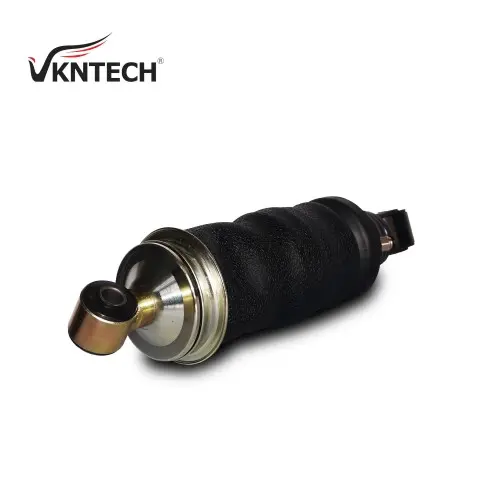
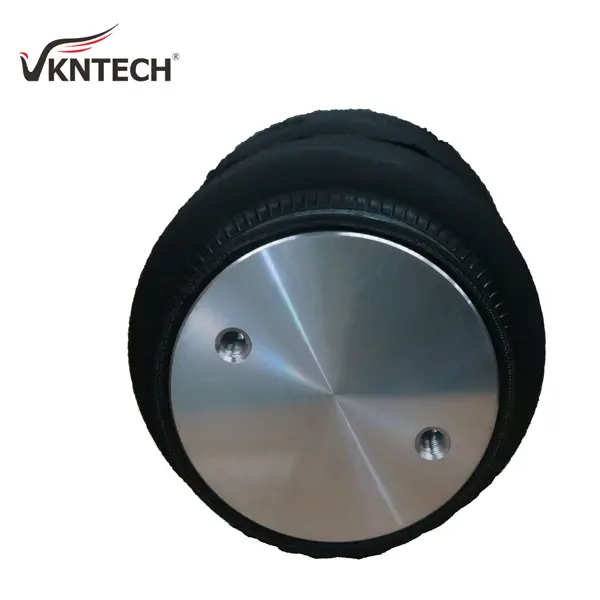
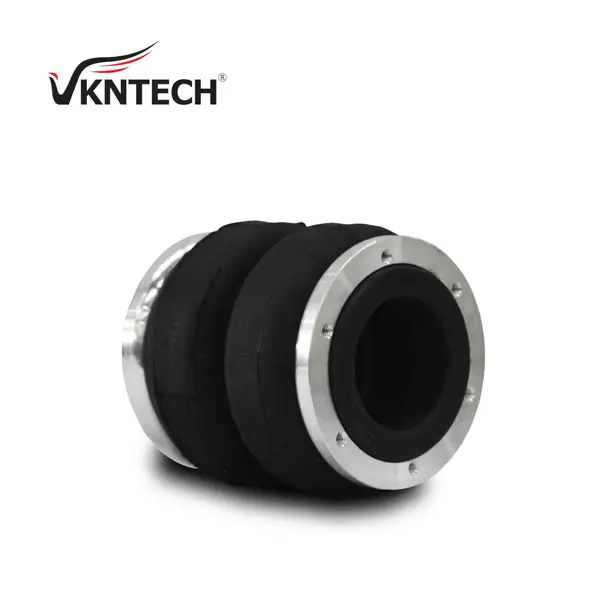
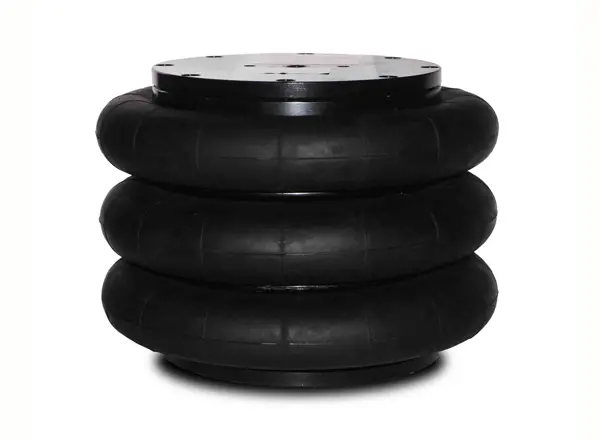
The air spring is a central component of the system. It uses a flexible, reinforced bellows containing compressed air to support a load and provide springing action. Changes in air pressure can alter the spring's load-support characteristics within its specified operating range.
Other suspension components perform different functions. Shock absorbers help control suspension movement, while compressors and control systems supply and regulate air when included in the design. These components work together, but they are not interchangeable.
Understanding these distinctions helps buyers identify the correct product category before making a purchasing decision.
The practical benefits of an air suspension system kit depend on the vehicle and its configuration. Several characteristics explain why air suspension is used in passenger cars, trucks, trailers, buses, and modified vehicles.
Commercial vehicles frequently operate with different payloads. As the load changes, the suspension must continue supporting the vehicle while maintaining appropriate operating geometry.
An air suspension system equipped with suitable height-control components can adjust air pressure to help maintain the specified chassis height within its design limits. This is particularly useful in applications where vehicle loading varies throughout daily operations.
However, an air spring alone does not automatically provide automatic ride-height adjustment. The necessary controls and compatible system components must be present.
Road irregularities generate movement that travels through the wheels, suspension, and vehicle structure. Air springs can help manage this movement by providing compliant support, while shock absorbers control oscillation and excessive suspension travel.
The result depends on the complete suspension design, including air spring characteristics, damping, mounting geometry, and operating pressure.
For trucks and trailers, appropriate suspension performance can help protect cargo and reduce unwanted movement. In passenger vehicles, it can contribute to ride comfort when the system is correctly designed and maintained.
An air ride suspension kit may be considered for modified vehicles where adjustable ride height or a different suspension configuration is required.
In these projects, compatibility is especially important. Available installation space, mounting points, suspension travel, wheel clearance, and the vehicle's intended use all influence component selection.
A replacement air spring designed for an existing suspension system should not automatically be treated as suitable for a custom modification. The intended application and engineering requirements must be verified first.
Start with the vehicle make, model, year, suspension configuration, and existing component identification. Original equipment numbers and cross-reference numbers can help narrow down compatible replacement products.
Two air springs may look similar but have different mounting arrangements, dimensions, or operating characteristics.
For aftermarket sourcing, verify the exact product reference and its documented application before placing an order.
Check the installed height, available working height, mounting interfaces, and relevant dimensional specifications. These details determine whether the component can fit within the suspension assembly and operate through the required range of movement.
For modified vehicles, clearance at full compression and extension also deserves attention. Incorrect dimensions can cause interference with nearby components or restrict suspension travel.
Air springs must be selected according to the intended load and specified operating conditions. Capacity is influenced by effective area, internal pressure, working height, and the design of the individual component.
Do not assume that a larger air spring is automatically more suitable. Excessive pressure or an unsuitable component can create problems for the suspension and supporting structure.
Always consult the technical specifications for the exact model and evaluate the requirements of the complete vehicle system.
A complete suspension arrangement may involve air springs, shock absorbers, compressors, air lines, valves, and electronic or manual controls.
Before purchasing an air suspension kit, confirm which of these components are included and which must be sourced separately. Replacement parts should also be compatible with the existing system's connections and operating requirements.
This check is particularly important for distributors handling several vehicle platforms or aftermarket applications.
Buyers should review the manufacturer's product specifications, quality documentation, applicable certifications, and available warranty terms.
For commercial applications, production consistency and reliable part identification can be important when managing repeat orders. For modification projects, clear installation requirements and application guidance help installers assess whether a product is appropriate.
Quality claims should be verified against the specific product and relevant documentation rather than generalized across an entire product range.
Several purchasing mistakes can lead to installation delays or unsatisfactory performance.
Choosing by appearance alone: Similar-looking air springs may differ in dimensions, mounting design, or application. Confirm the part number and technical specifications.
Assuming every kit is complete: Some products supply replacement air springs rather than a full system. Check the product description and included components.
Ignoring operating conditions: Temperature, load variation, available installation space, and suspension travel all affect suitability.
Overlooking related components: Worn shock absorbers, leaking air lines, damaged fittings, or control-system faults can affect overall performance even when a replacement air spring is suitable.
Skipping post-installation checks: Correct installation should be followed by appropriate leak checks, clearance inspections, and verification of system operation in accordance with the vehicle manufacturer's procedures.
Addressing these points before installation helps reduce avoidable compatibility problems.
VKNTECH, operated by Guangzhou Viking Auto Parts Co., Ltd., has focused on the manufacture and research of air springs, shock absorbers, and air compressors since 2009.
Its product portfolio includes commercial air springs for trucks, trailers, cabins, seats, and buses, as well as passenger car air suspension springs, convoluted air springs, industrial air springs, passenger car air compressors, and air lift or air ride products.
This range serves different suspension requirements, from replacement components for existing vehicle systems to products used in modified vehicles and specialized applications.
For buyers evaluating an air suspension kit, the most useful starting point is the intended application. Providing the existing part number, vehicle details, dimensional requirements, and installation purpose helps establish which product needs to be evaluated.
Where a product has OEM or cross-reference information, verify that information against the intended vehicle or suspension system. For custom applications, confirm the mounting arrangement and operating requirements before treating a component as interchangeable with an existing part.
This application-based approach helps distributors, repair businesses, and vehicle specialists make more informed sourcing decisions.
Selecting an air suspension kit requires more than matching dimensions or choosing a product based on its appearance. Vehicle compatibility, load requirements, working height, mounting configuration, and the components included in the kit all influence the final result.
For replacement applications, accurate part identification is essential. For modified vehicles, the suspension layout and operating conditions need careful evaluation. In both cases, technical documentation and proper installation checks help establish whether the selected components are suitable.
By starting with clear application requirements and verifying compatibility before purchasing, buyers can reduce sourcing errors and choose air suspension products that meet the practical needs of their vehicles.


 en
 English
 Vietnamese
 Spanish
 Thai
 Portuguese
 Korean
 Russian
 French
 German
 Polish
 Arabic
 Indonesian
 Burmese