 Home > About Us > News > Industry News > What Should You Check First When Buying air suspension parts for passenger cars?
 Air suspension is often associated with ride comfort, but its real value lies in how several components work together to support the vehicle, control ride height, and manage suspension movement. When one component fails, replacing it with a visually similar part is not always enough. Dimensions, mounting structure, vehicle application, and compatibility with the rest of the system all matter.
For distributors, repair shops, aftermarket buyers, and vehicle parts businesses, understanding these details is especially important when sourcing air suspension parts for passenger cars.
At VKNTECH, the product range covers passenger car air suspension springs, passenger car air compressors, air suspension shock absorbers, and other air suspension products, alongside commercial and industrial air spring applications.
A passenger car air suspension system normally combines several components. Depending on the vehicle design, these can include air springs or air suspension struts, compressors, air lines, valves, height sensors, and electronic control components.
Each component has a different function.
The air spring provides the flexible air chamber that supports the vehicle. The compressor supplies compressed air when system pressure needs to be restored. The shock absorber controls suspension movement, while valves, sensors, and electronic controls help manage pressure and ride height.
This means that selecting air suspension parts for passenger cars should begin with understanding the complete suspension configuration rather than focusing only on the failed component.
One of the most common problems in aftermarket sourcing is assuming that two similar-looking air springs are interchangeable.
They may have different:
These differences can directly affect installation and suspension performance.
For example, VKNTECH lists passenger-car air suspension products associated with applications from Mercedes-Benz, BMW, Audi, Porsche, and Land Rover suppliers. Its product listings also provide OE reference information for specific applications.
For buyers, the original part number should therefore be one of the first pieces of information checked before ordering air suspension parts for passenger cars.
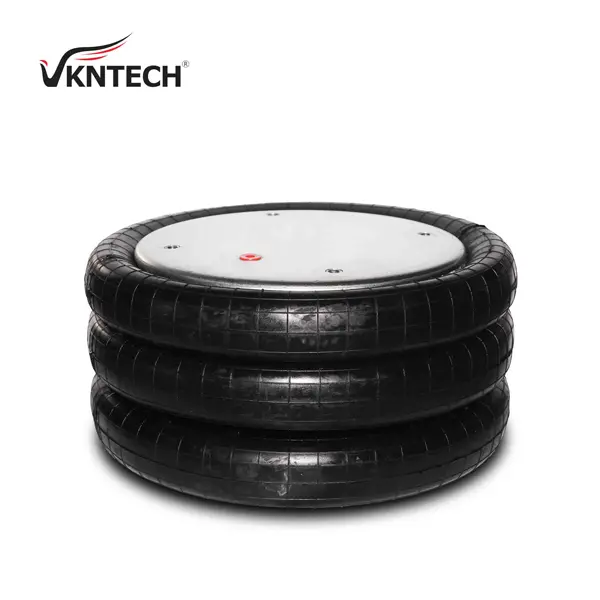
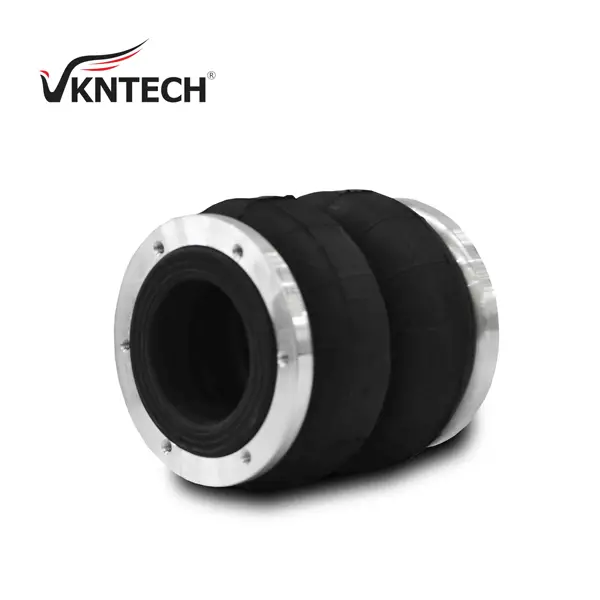
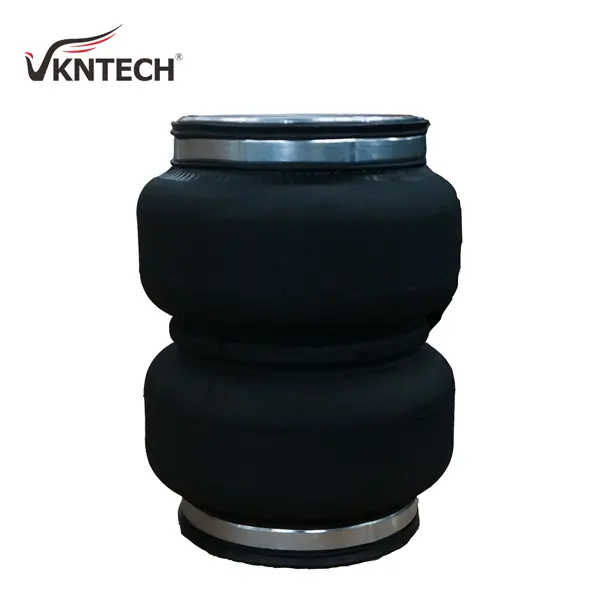
An air spring uses a flexible rubber bellows to contain compressed air. Changes in air pressure alter the spring's supporting characteristics, allowing the suspension system to respond to changing load and ride-height requirements.
But the rubber bellows is only one part of the assembly. The piston, top plate, mounting hardware, air connection, and other structural components also affect installation and operation.
This is why replacement selection should consider both the flexible element and the mechanical structure around it.
A replacement that has the correct general size but a different mounting configuration may not be appropriate. For aftermarket applications, matching the vehicle, reference number, dimensions, and mounting structure provides a much more reliable identification process.
A compressor is another important category of air suspension parts for passenger cars.
Its primary role is to supply compressed air to the suspension system when pressure needs to be increased or restored. If the compressor cannot operate correctly, the vehicle may have difficulty maintaining its intended ride height.
However, a compressor that runs frequently or for an unusually long period does not automatically mean that the compressor itself is defective. An air leak, valve problem, sensor issue, or another system fault can produce similar symptoms.
For this reason, maintenance teams should inspect the complete system before replacing the compressor.
VKNTECH offers passenger car air compressors alongside passenger car air suspension springs, reflecting the fact that these components are closely connected within the overall air suspension system.
Another important distinction is between spring support and damping.
The air spring provides the springing function, while the shock absorber controls excessive suspension movement. When the vehicle travels over uneven roads, the suspension moves in response to road conditions. Appropriate damping helps control that movement.
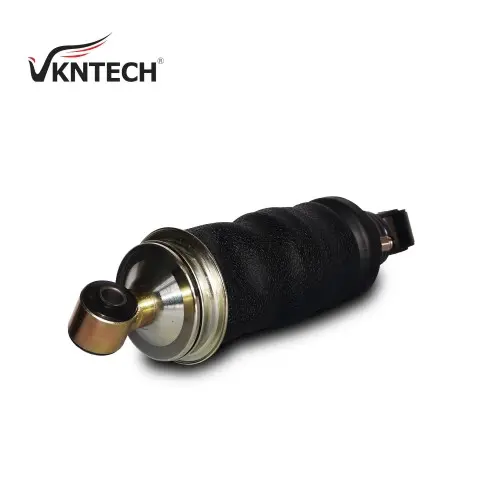
Some passenger vehicles use air suspension struts that combine air spring and shock absorber functions in an integrated assembly.
This makes application matching particularly important. VKNTECH lists passenger-car air suspension shock absorber products for applications including Mercedes-Benz W221 S-Class and Audi A8 platforms.
When purchasing air suspension parts for passenger cars, buyers should therefore identify whether the vehicle uses a separate air spring and shock absorber or an integrated air suspension strut.
Accurate product identification becomes much easier when the buyer provides technical information rather than only a vehicle description.
Useful information includes:
If the original part number is unavailable, dimensional drawings can help narrow down possible replacements. However, dimensions should still be checked against the actual vehicle application because different products can share similar measurements while using different mounting structures.
A supplier of air suspension parts for passenger cars needs to manage more than individual product designs. The aftermarket involves multiple vehicle platforms, replacement references, suspension configurations, and product categories.
VKNTECH, associated with Guangzhou Viking Auto Parts Co., Ltd., has focused on the manufacture and research of air springs, shock absorbers, and air compressors since 2009. The company operates a production facility in Guangzhou and has developed product lines covering passenger cars, commercial vehicles, industrial equipment, and air lift/air ride applications.
Its passenger-car range includes air suspension springs, compressors, and related suspension components, while the broader product portfolio includes commercial air springs, convoluted air springs, industrial air springs, and air lift/air ride kits.
For aftermarket buyers, this broader product structure can be useful when different suspension components need to be sourced according to specific vehicle applications.
Replacing a component without identifying why it failed can result in repeated problems.
For an air spring, inspection may focus on bellows condition, air leakage, mounting areas, and structural components. For a compressor, technicians may need to investigate pressure loss, air leaks, electrical issues, or excessive operating time.
Important quality considerations for replacement air suspension parts for passenger cars include:
The goal is not simply to find a component that fits physically. The replacement should correspond to the vehicle's intended suspension configuration.
Passenger car air suspension combines mechanical components, compressed air, and electronic control. A failure in one area can affect the behavior of the entire system.
For this reason, sourcing air suspension parts for passenger cars should be based on application data, not appearance alone. Original part numbers, vehicle information, dimensions, mounting structure, and system configuration all help determine whether a replacement is appropriate.
With its focus on air springs, shock absorbers, compressors, and related suspension products, VKNTECH provides a product range covering several passenger-car air suspension requirements.
For distributors and repair professionals, the most practical approach is straightforward: identify the vehicle and suspension system first, confirm the technical specifications second, and select the replacement component only after compatibility has been established.


 en
en
 English
 Vietnamese
 Spanish
 Thai
Thai Portuguese
 Korean
 Russian
 French
 German
 Polish
 Arabic
 Indonesian
 Burmese