 Home > About Us > News > Industry News > Beyond Bulk Buying: How to Choose Wholesale Air Suspension Products That Fit Your Market
For automotive parts distributors, repair networks, and commercial vehicle parts suppliers, buying suspension components in bulk requires more than comparing product specifications. The right products must match vehicle applications, meet replacement requirements, and remain consistent across repeat orders. This is especially important when sourcing wholesale air suspension products for a market that includes passenger cars, trucks, trailers, buses, and industrial equipment.
Air suspension is not a single component. It is a system built around air springs and, depending on the application, compressors, shock absorbers, and other control components. For wholesale buyers, understanding these differences helps prevent incorrect orders, reduce compatibility issues, and build a product range that meets actual customer demand.
The term wholesale air suspension covers several categories of products used in vehicle suspension and related industrial applications. Each category serves a different function, so buyers should identify the intended application before selecting products.
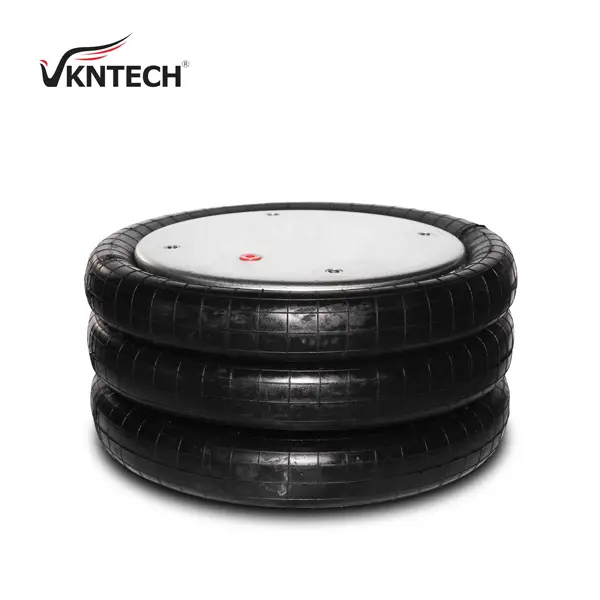
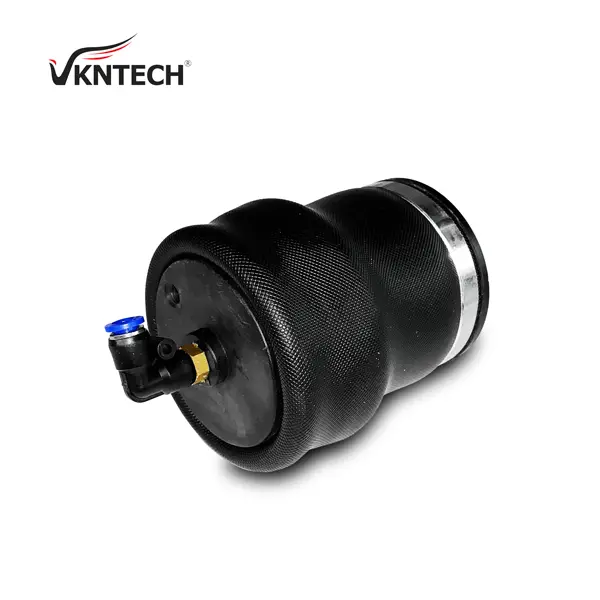
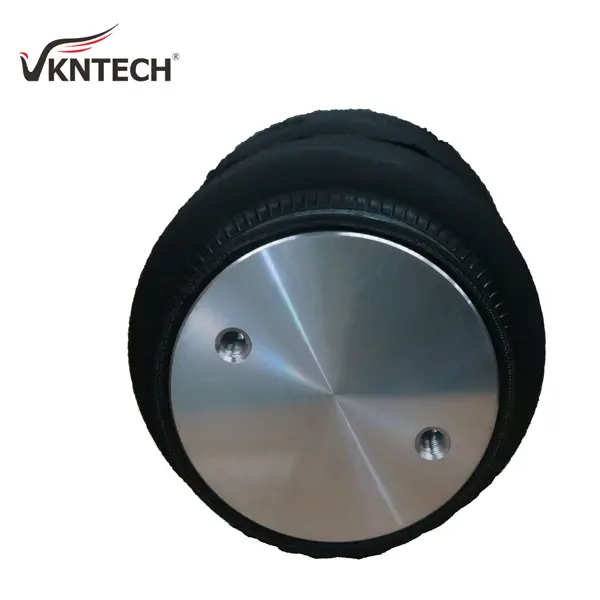
Air springs use compressed air to support a load and provide suspension movement. They are used in commercial vehicles, passenger cars, seats, cabins, trailers, and certain industrial systems. Their dimensions, mounting structures, working height, and load requirements vary by application.
Air suspension shock absorbers help control suspension movement, while air suspension compressors supply compressed air to systems that require pressure generation. These components work together, but they are not interchangeable. A replacement air spring cannot automatically solve a compressor or shock absorber problem.
For distributors building a wholesale inventory, separating products by category and application makes product selection more accurate. It also helps sales and purchasing teams identify which specifications and reference numbers must be confirmed before an order is placed.
One of the most common challenges in aftermarket suspension sourcing is identifying a replacement part that fits the actual vehicle or equipment.
Two air springs may look similar but differ in mounting plates, air inlet positions, dimensions, or compatible vehicle applications. Even small differences can affect installation. Similar issues can occur with compressors and air suspension shock absorbers when electrical connections, mounting arrangements, or original equipment references do not match.
Before placing a bulk order, buyers should collect the following information:
Vehicle make, model, and year where applicable
Original equipment number or established cross-reference number
Product dimensions and mounting configuration
Intended application, such as truck, trailer, bus, passenger car, or industrial equipment
Required quantity and packaging specifications
These details help suppliers identify suitable products and reduce the risk of receiving parts that cannot be used in the intended application.
For wholesale air suspension buyers serving several vehicle segments, it is also useful to organize inventory by application rather than relying on product appearance alone. Clear catalog information can simplify stock management and make future replenishment more predictable.
A dependable supply relationship begins with the manufacturer's ability to provide relevant products and maintain consistent specifications.
Product range: A supplier offering different air spring categories, compressors, and related suspension components may help distributors consolidate sourcing. However, buyers should confirm that the available range actually matches their target market instead of assuming that a broad catalog covers every vehicle.
Manufacturing experience: Experience in air spring production and product development can be relevant when assessing a supplier's familiarity with different application requirements. Buyers should also examine the technical information available for individual products.
Quality documentation: Ask which quality management certifications, product specifications, and inspection records are available for the requested items. Certification scope should be checked rather than assumed to apply to every product or production process.
Order consistency: For recurring purchases, approved specifications, sample confirmation, and clear product identification help reduce discrepancies between batches. Buyers should also clarify how product changes and specification updates are communicated.
Communication and order coordination: Accurate part references, clear packaging requirements, and timely confirmation of product details can help prevent avoidable delays. These factors matter when a distributor needs to coordinate inventory with repair shops or downstream customers.
A structured evaluation is more useful than choosing a supplier based on a general claim of quality. It gives purchasing teams specific criteria that can be checked before committing to a long-term supply arrangement.
The requirements of an air suspension distributor depend heavily on the customers it serves.
Truck and trailer suspension systems must accommodate changing loads and repeated road impacts. Air springs help support vehicle loads and maintain chassis height when used with a suitable level-control system. Trailer applications may also use lifting air springs on lift axles.
For these markets, buyers should prioritize correct reference numbers, mounting compatibility, and the intended operating conditions. A product designed for one axle or suspension configuration should not be assumed suitable for another.
Passenger car air suspension components require careful vehicle matching. Air springs, air suspension struts, and compressors may differ substantially between models, even within the same vehicle brand.
Distributors should verify vehicle application and original equipment references before purchasing replacement inventory. Accurate compatibility information can also reduce confusion during aftermarket sales.
Bus air springs support passenger comfort and can work with suspension systems designed to control vehicle height. Cabin air springs serve a different purpose by isolating the driver's cabin from some vibration transmitted through the chassis.
These products should be listed and sourced separately because their installation positions and functional requirements are different.
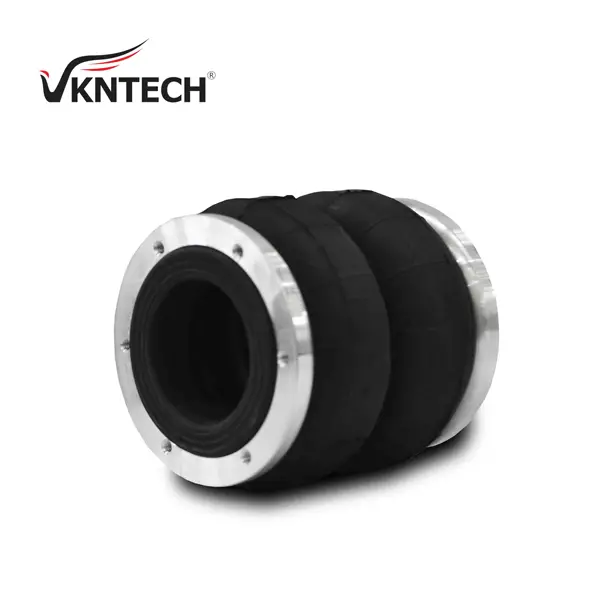
Industrial air springs can be used for load support, vibration isolation, and other specialized applications. Selection depends on factors such as load, working height, available space, movement, and operating environment.
For industrial buyers, application data and technical specifications are particularly important because vehicle reference numbers may not apply.
VKNTECH, operated by Guangzhou Viking Auto Parts Co., Ltd., has focused on the manufacture and research of air springs, shock absorbers, and air compressors since 2009. Its product range includes commercial air springs, passenger car air suspension springs, passenger car air compressors, convoluted air springs, industrial air springs, and air lift or air ride kits.
The company reports a manufacturing facility covering 30,000 square meters and an annual air spring output capacity of 200,000 pieces. These company-reported figures provide useful context for buyers evaluating manufacturing scale, although the suitability of any particular order should still be confirmed directly.
For distributors and aftermarket suppliers considering wholesale air suspension purchases, the practical starting point is to identify the product categories and applications their customers require most frequently. Buyers can then confirm available models, reference numbers, specifications, packaging, and order arrangements with VKNTECH.
Rather than ordering solely on the basis of broad product categories, purchasing teams should establish a clear list of required applications and verify each item individually. This approach helps keep inventory relevant while reducing the likelihood of compatibility problems.
Before finalizing a wholesale order, buyers should ask:
Which vehicle or equipment applications does each product fit?
Are original equipment numbers and cross-reference details available?
What dimensions, mounting specifications, and technical parameters apply?
Which quality certifications and inspection documents can be provided?
What are the minimum order requirements, packaging arrangements, and lead times?
How will repeat orders be matched to the approved product specifications?
The answers help buyers compare suppliers on verifiable details and establish a more consistent procurement process.
Successful wholesale air suspension sourcing depends on product compatibility, application knowledge, manufacturing consistency, and clear communication. Air springs, shock absorbers, and compressors serve different functions, so each item should be selected according to its intended use and technical requirements.
For distributors, repair networks, and automotive parts businesses, a well-organized sourcing process can reduce ordering errors and support more reliable inventory planning. With its range of air suspension components and manufacturing experience, VKNTECH offers a starting point for buyers evaluating products for passenger cars, commercial vehicles, trailers, buses, and industrial applications.


 en
 English
 Vietnamese
 Spanish
 Thai
 Portuguese
 Korean
 Russian
 French
 German
 Polish
 Arabic
 Indonesian
 Burmese