 Home > About Us > News > Industry News > More Than Air Springs: Understanding the Parts Behind a Reliable Air Suspension System
Air suspension has become an important solution in modern passenger vehicles, commercial trucks, trailers, buses, and industrial equipment. Unlike conventional suspension systems that rely primarily on steel springs, air suspension uses compressed air to support vehicle loads, adjust ride height, and help control vibration.
However, the performance of an air suspension system does not depend on the air spring alone. Multiple components must work together to maintain the required pressure, support changing loads, and respond to different operating conditions.
For automotive parts distributors, repair workshops, fleet operators, and vehicle manufacturers, understanding the different air suspension system parts is essential when selecting replacement components or developing a complete suspension solution.
VKNTECH, operated by Guangzhou Viking Auto Parts Co., Ltd., specializes in the manufacture and research of air springs, shock absorbers, and air compressors, providing products for passenger cars, commercial vehicles, trailers, and industrial applications.
An air suspension system consists of several interconnected components. Each has a specific function, and a problem with one component may affect the operation of the entire system.
The air spring is one of the most important air suspension system parts. It uses compressed air inside a reinforced rubber bellows to support the vehicle's weight and absorb road impacts.
Compared with conventional coil springs, air springs allow suspension characteristics and ride height to be adjusted through changes in air pressure.
Different applications require different air spring constructions:
Sleeve air springs: Commonly used in truck, trailer, and cabin suspension applications.
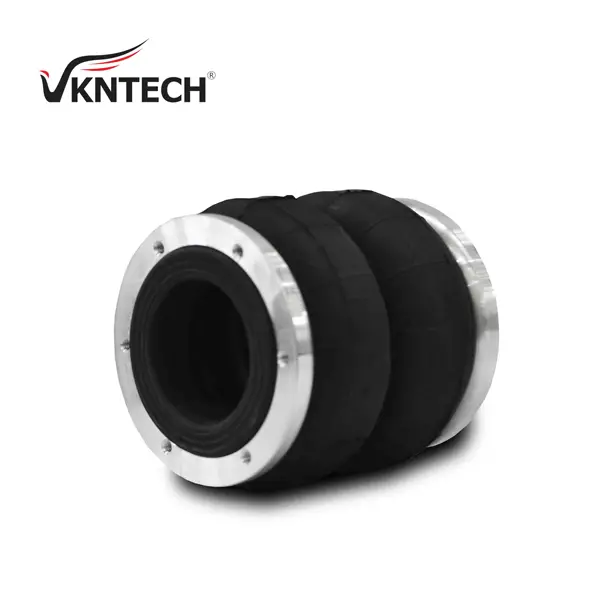
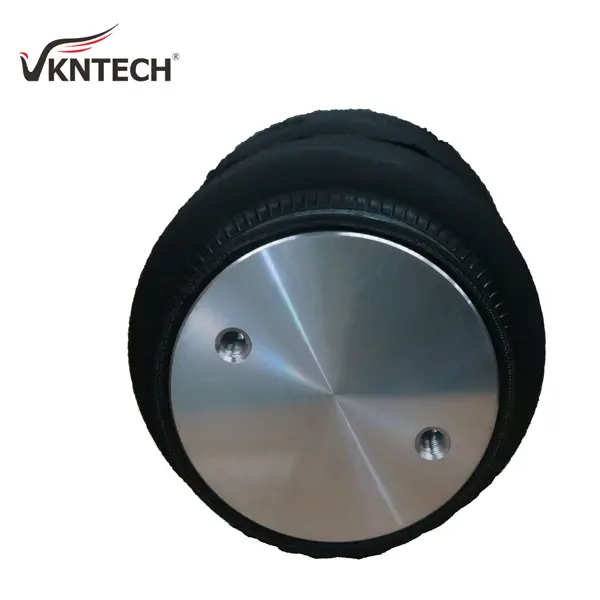
Double convoluted air springs: Feature two flexible bellows sections and are used in various commercial and industrial applications.
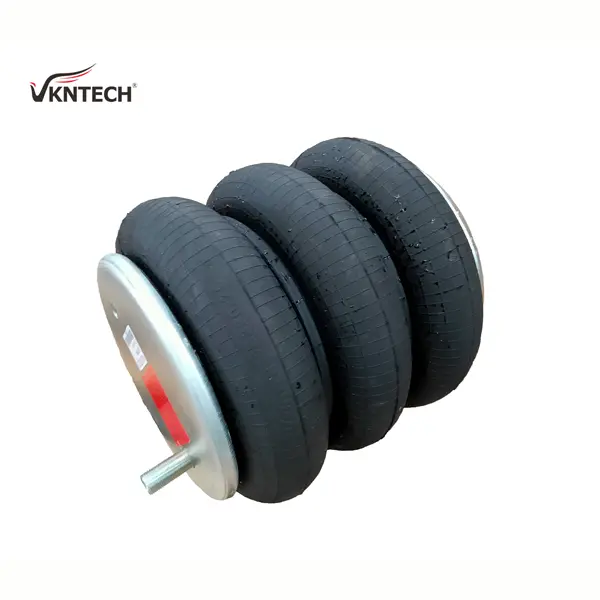
Triple convoluted air springs: Provide a different load and movement configuration for selected suspension systems.
Passenger car air springs: Designed for specific vehicle suspension structures, including integrated air suspension assemblies.
When selecting an air suspension spring, buyers should check the original part number, dimensions, mounting structure, and intended vehicle application.
The air suspension compressor supplies compressed air to the system when additional pressure is required.
It works together with valves, sensors, and electronic controls to maintain the required air pressure and suspension height.
A compressor that cannot generate sufficient pressure may cause slow suspension adjustment or prevent the vehicle from reaching its intended ride height.
When sourcing an air suspension compressor, buyers should verify:
Original equipment reference number.
Vehicle make and model.
Electrical specifications.
Mounting configuration.
Air outlet connections.
Compatibility with the existing suspension control system.
VKNTECH offers passenger car air compressors for different vehicle applications, including replacement products associated with Mercedes-Benz and other premium vehicle platforms.
Air springs support the vehicle, but they do not replace the function of shock absorbers.
The shock absorber controls suspension movement by reducing excessive oscillation after the wheels encounter road irregularities.
In an air suspension system, the shock absorber works alongside the air spring to maintain more controlled vehicle movement.
For passenger vehicles, air suspension shock absorbers may also be integrated with air spring structures, depending on the vehicle design.
When choosing air suspension shock absorbers, it is important to check the mounting dimensions, vehicle compatibility, damping configuration, and original equipment reference.
Air valves regulate the movement of compressed air between the compressor, air springs, and other system components.
Height sensors monitor the distance between the vehicle body and suspension components. Their signals help the electronic control unit determine whether the suspension needs to adjust its height.
These components are important for automatic ride-height control.
A faulty sensor or valve may cause incorrect height readings, uneven suspension behavior, or unnecessary compressor operation.
For replacement purposes, compatibility with the vehicle's electronic control system is just as important as physical installation dimensions.
Air lines and fittings connect the compressor, valve assembly, and air springs.
They provide the passages through which compressed air moves throughout the suspension system.
Leaks, damaged connections, or deteriorated air lines can cause pressure loss and reduce suspension efficiency.
During maintenance, these supporting air suspension components should be inspected together with the major assemblies. Replacing an air spring without checking the associated connections may leave the original problem unresolved.
Understanding the relationship between components helps buyers make more accurate purchasing decisions.
A typical operating process involves several stages:
Step 1: Pressure generation
The compressor generates compressed air when the suspension control system identifies a pressure or ride-height requirement.
Step 2: Air distribution
The valve system directs compressed air toward the appropriate air spring according to the control signals.
Step 3: Load support and height adjustment
The air springs respond to pressure changes, supporting the vehicle and helping maintain the required ride height.
Step 4: Movement control
Shock absorbers work with the air springs to control suspension movement during driving.
Step 5: System monitoring
Height sensors and electronic controls monitor operating conditions and coordinate adjustments when necessary.
This coordinated operation explains why selecting compatible air suspension system parts is important. A component may have similar external dimensions to the original part but still be unsuitable because of differences in mounting structure, pressure requirements, or control-system compatibility.
Not all air suspension systems are designed for the same purpose. Vehicle type, load requirements, installation space, and operating conditions influence component selection.
Passenger car air suspension systems are commonly used in premium vehicles where adjustable ride height and controlled suspension characteristics are important.
Typical replacement requirements include air suspension springs, air struts, compressors, and related components.
VKNTECH offers passenger car air suspension springs and compressor products associated with applications for Mercedes-Benz, BMW, Audi, Porsche, and Land Rover.
Commercial vehicles operate under changing load conditions, making suspension performance particularly important.
Truck and trailer air springs help support different loads while maintaining the required suspension height.
Depending on the vehicle configuration, replacement requirements may include truck air springs, trailer air springs, shock absorbers, and lifting axle air springs.
Bus air springs help support the vehicle suspension system, while cabin air springs are installed between the driver's cabin and chassis.
Cabin suspension components help reduce vibration transmitted from the vehicle frame, contributing to a more comfortable driving environment.
Seat air springs are another specialized category used in commercial vehicle seating systems.
Air springs are also used in industrial machinery for vibration isolation and pneumatic actuation.
In these applications, component selection depends on load capacity, operating pressure, available installation space, and the required movement characteristics.
For distributors, workshops, and fleet maintenance teams, choosing replacement components based only on appearance can create unnecessary compatibility problems.
A more reliable selection process should include the following considerations.
1. Identify the original part number
The original equipment number is one of the most useful references when searching for replacement components. Cross-reference information can help identify compatible product options.
2. Confirm the vehicle application
Check the vehicle manufacturer, model, production year, axle position, and suspension configuration.
3. Verify physical dimensions
Important measurements may include air spring height, bellows diameter, piston dimensions, mounting-hole spacing, and air inlet position.
4. Check operating requirements
Load conditions, working height, pressure requirements, and suspension travel should be considered before selecting a replacement.
5. Evaluate component quality
Rubber construction, reinforcement layers, metal components, sealing performance, and manufacturing consistency all influence the service life of air suspension products.
For larger purchasing programs, buyers should also consider product availability, batch consistency, technical support, and warranty arrangements.
VKNTECH, operated by Guangzhou Viking Auto Parts Co., Ltd., has focused on air spring, shock absorber, and air compressor manufacturing and research since 2009.
The company operates a 30,000-square-meter production facility and has developed more than 1,500 product models covering different air suspension applications.
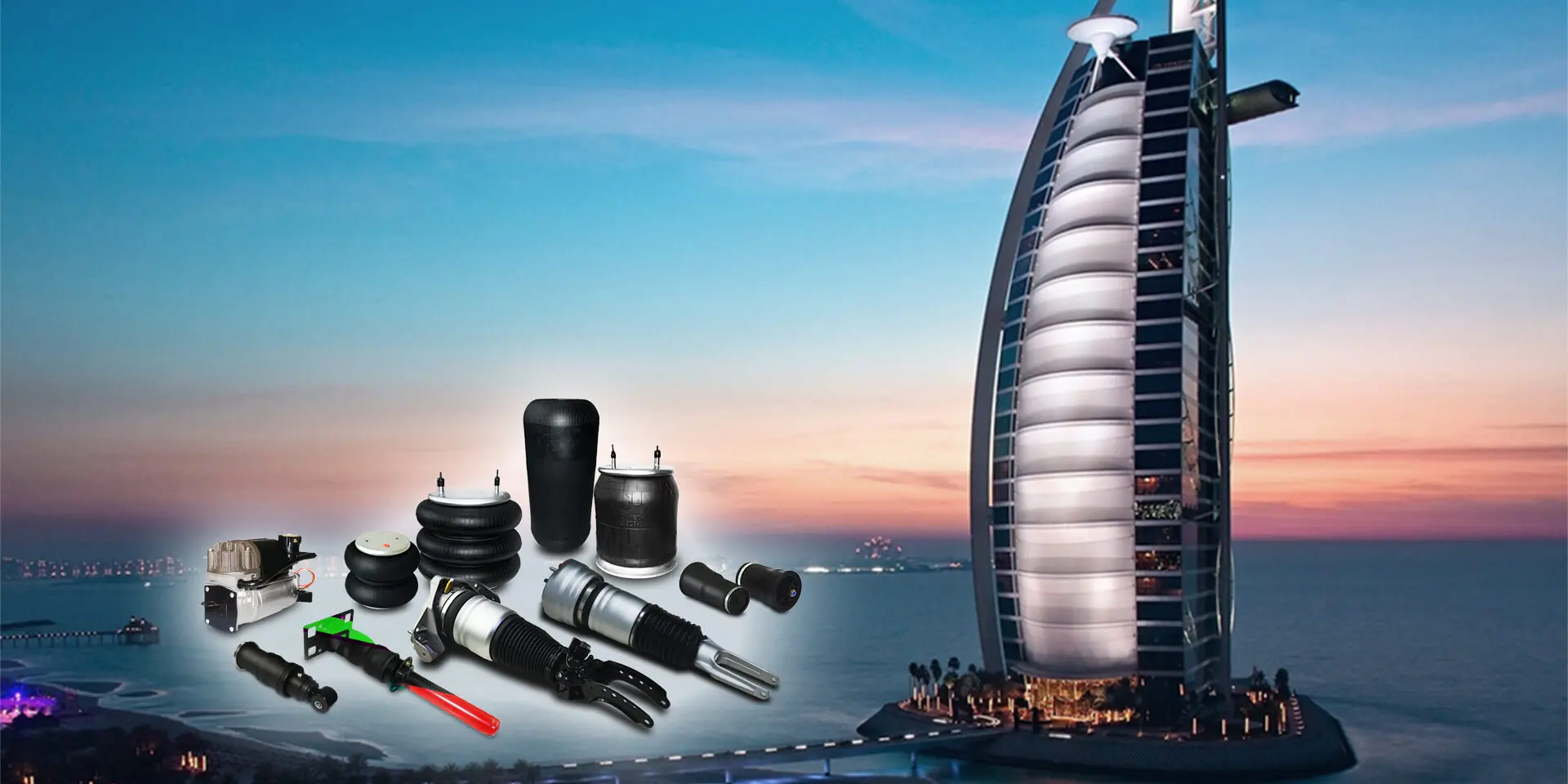
Its product range includes commercial air springs, passenger car air suspension springs, passenger car air compressors, convoluted air springs, industrial air springs, and air lift/air ride kits.
For buyers sourcing air suspension system parts, this product coverage provides options for different vehicle and equipment requirements.
Whether the application involves a passenger car, truck, trailer, bus, or industrial machine, identifying the original specifications and intended operating conditions remains the starting point for selecting the appropriate component.
A reliable air suspension system depends on the coordinated operation of air springs, compressors, shock absorbers, valves, sensors, and supporting accessories.
Each component performs a different function, and compatibility between these components is essential for maintaining proper suspension operation.
For distributors, automotive repair businesses, and fleet operators, understanding the structure and application of air suspension system parts helps reduce replacement errors and improve purchasing decisions.
With its range of passenger car, commercial vehicle, and industrial air suspension products, VKNTECH provides component options for different suspension applications. Selecting products according to original references, vehicle specifications, and actual operating requirements is the most practical way to build a reliable replacement supply system.


 en
 English
 Vietnamese
 Spanish
 Thai
 Portuguese
 Korean
 Russian
 French
 German
 Polish
 Arabic
 Indonesian
 Burmese