 Home > About Us > News > Industry News > Air Suspension Supplier: How to Find the Right Partner for Different Vehicle and Industrial Applications
Air suspension systems are used in a growing range of vehicles and industrial equipment because they offer adjustable load support, vibration isolation, and ride-height control. However, not every air suspension component is designed for the same working conditions. A truck air spring, passenger car air suspension assembly, and industrial air spring can differ significantly in structure, dimensions, and performance requirements.
For distributors, automotive parts wholesalers, vehicle manufacturers, and equipment maintenance companies, choosing the right air suspension supplier is therefore an important purchasing decision. Beyond product availability, buyers need to consider application compatibility, manufacturing consistency, replacement references, and the supplier's ability to cover different product categories.
Before evaluating an air suspension supplier, it is useful to understand the main products used in air suspension systems. Although these components share the principle of using compressed air, their functions and installation requirements are different.
Commercial air springs are widely used in trucks, trailers, buses, and other heavy-duty vehicles. They support vehicle loads while helping maintain chassis height under changing payload conditions.
Truck air springs need to accommodate variations in axle load, road conditions, and operating distance. Trailer air springs also contribute to suspension stability and help protect transported goods from excessive road vibration.
Bus air springs focus on passenger comfort and stable suspension performance under both loaded and unloaded conditions. Meanwhile, cabin and seat air springs provide additional vibration isolation for drivers, particularly during long-distance transportation.
Passenger car air suspension systems are designed around vehicle-specific suspension structures. They are commonly found in premium vehicles where ride comfort, vehicle height adjustment, and suspension response are important considerations.
Replacement selection requires careful attention to vehicle models, installation positions, OE numbers, and assembly configurations. A component that looks similar to the original may still have different mounting dimensions or connection arrangements.
Industrial air springs are used in machinery and equipment where vibration isolation, flexible support, and controlled movement are required.
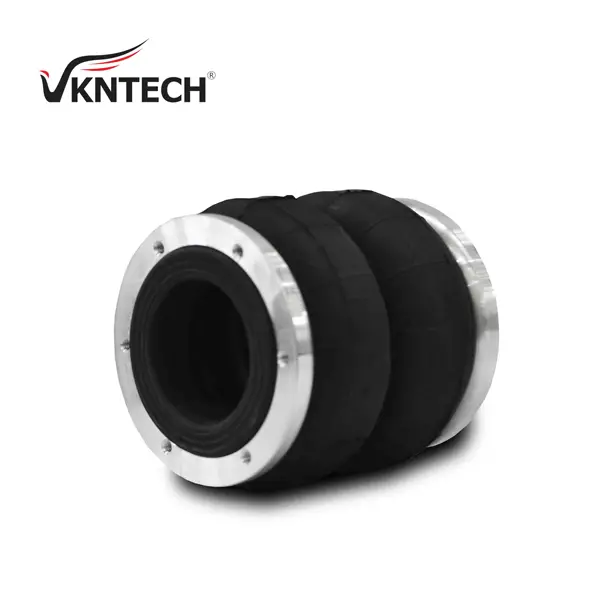
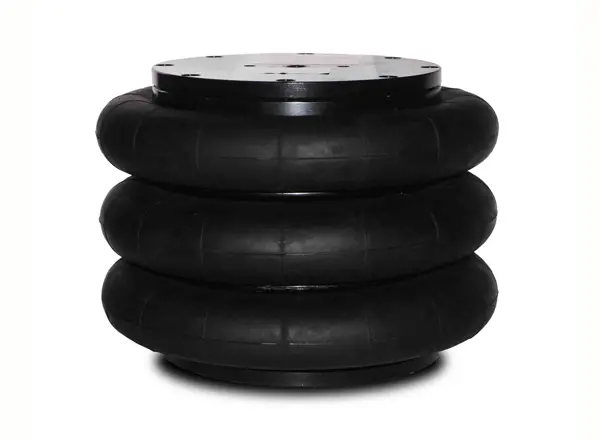
Single, double, and triple convoluted air springs offer different structural configurations. The appropriate design depends on available installation space, load requirements, operating height, and movement characteristics.
Industrial applications may include manufacturing equipment, pneumatic actuators, and vibration-isolation systems.
Product range alone does not determine whether a supplier is suitable for a particular purchasing project. Buyers should also evaluate the following factors.
1. Application-Specific Product Coverage
A supplier serving only passenger cars may not have suitable products for commercial trucks or industrial machinery. Buyers managing multiple product categories should look for a manufacturer with experience in different air spring structures and application requirements.
A broader product range can simplify sourcing and make it easier to coordinate replacement components for different customers.
2. Accurate Product Identification and Compatibility
Compatibility is one of the most important considerations when purchasing replacement air suspension parts.
For commercial and passenger vehicles, useful identification information includes:
Vehicle make, model, and year
Original equipment reference number
Front or rear installation position
Air spring dimensions and mounting configuration
Air inlet and connection arrangement
For industrial applications, buyers should provide load requirements, working height, installation dimensions, and operating conditions.
An experienced air suspension supplier should be able to use these details to help identify an appropriate product rather than relying on appearance alone.
3. Manufacturing Experience and Production Capability
Air springs contain several components that work together, including reinforced rubber bellows, metal end plates, pistons, and connection fittings. The quality and consistency of these components influence the finished assembly.
Manufacturing processes, material selection, molding consistency, and assembly accuracy all deserve attention.
Buyers should also evaluate whether the supplier has sufficient production capability to support repeat orders and different model requirements.
4. Quality Inspection and Product Consistency
Air suspension components operate under repeated compression, extension, and pressure changes. Manufacturing defects or inconsistent assembly can lead to air leakage, premature wear, or installation problems.
Relevant quality checks may include dimensional inspection, air tightness testing, pressure testing, material verification, and visual inspection.
For distributors and wholesalers, consistent product specifications across production batches are particularly important because they affect inventory management and customer satisfaction.
5. OEM and Customization Support
Different vehicle platforms and industrial installations may require specific product configurations. OEM and ODM capabilities can help address these requirements through product development, tooling, and customized manufacturing arrangements.
Before starting a customization project, buyers should clarify technical drawings, reference samples, expected quantities, and performance requirements.
An air suspension system does not rely on a single component. Depending on the vehicle design, it may include air springs, shock absorbers, compressors, valves, sensors, and electronic control components.
The air spring provides load support and the springing function. The compressor supplies compressed air, while the shock absorber controls suspension movement. These components have different responsibilities and should not be treated as interchangeable.
For automotive parts distributors, working with a supplier that covers several related product categories can make sourcing more manageable.
VKNTECH, operated by Guangzhou Viking Auto Parts Co., Ltd., has focused on the manufacture and research of air springs, shock absorbers, and air compressors since 2009.
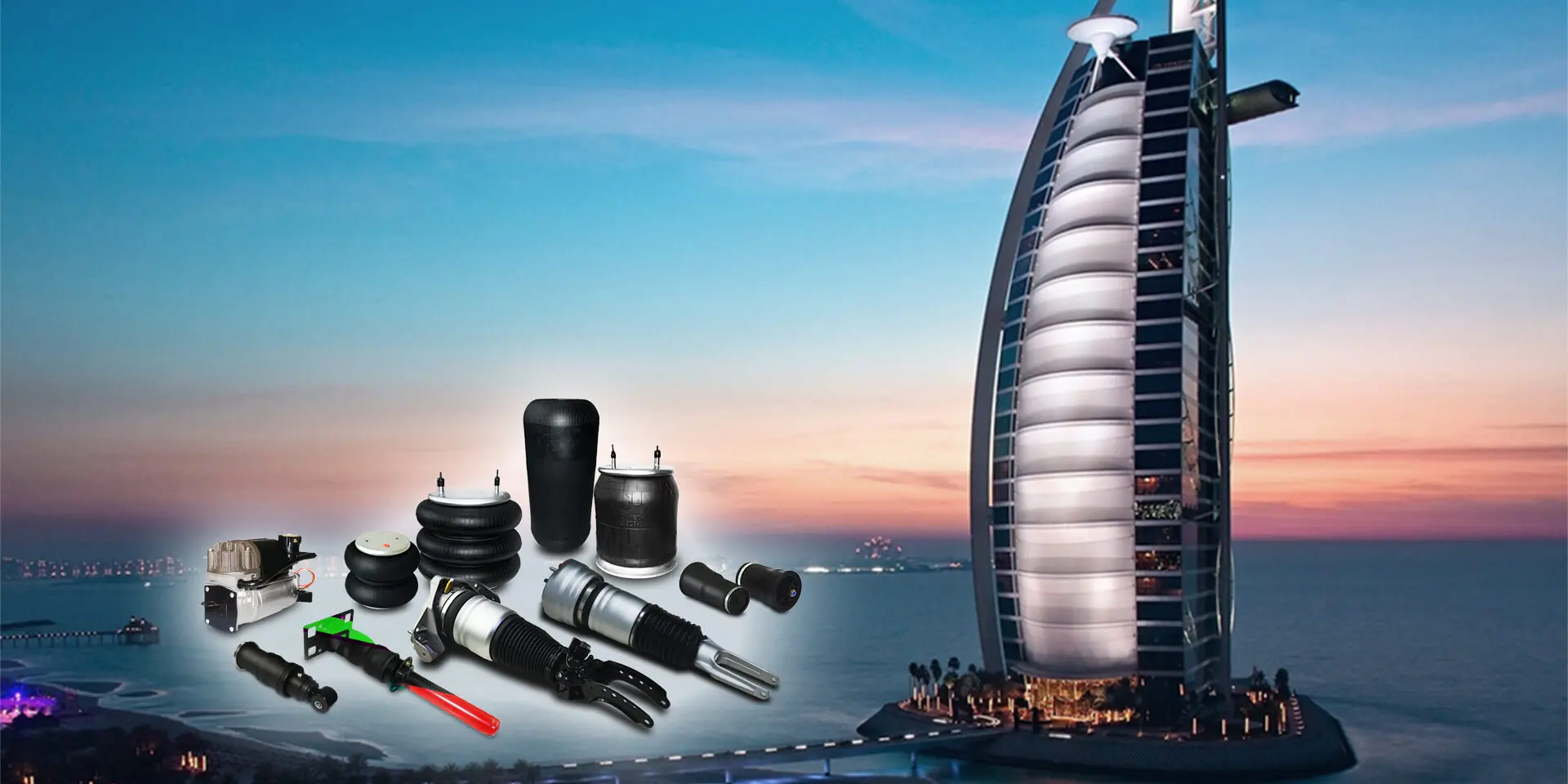
Its product range covers commercial air springs, passenger car air suspension springs, passenger car air compressors, convoluted air springs, industrial air springs, and Air Lift/Air Ride Kits.
Commercial applications include truck, trailer, cabin, seat, and bus air springs. Its convoluted air spring range includes single, double, and triple configurations for different installation and load requirements.
With manufacturing facilities covering 30,000 square meters and a product portfolio of more than 1,500 models, VKNTECH serves OEM and aftermarket customers across different automotive and industrial markets.
For buyers sourcing products in bulk or managing multiple replacement applications, providing complete product information at the beginning of the purchasing process can reduce unnecessary communication and specification errors.
A practical procurement checklist includes:
Confirming the intended vehicle or equipment application.
Providing OE numbers or existing product references where available.
Checking dimensions, mounting positions, and connection details.
Identifying the required product category and quantity.
Requesting relevant technical specifications and inspection information.
Confirming packaging, delivery arrangements, and warranty conditions.
For replacement air springs, it is also important to inspect the surrounding suspension system. Incorrect installation, damaged mounting components, or problems elsewhere in the pneumatic system may affect the performance of a newly installed product.
A suitable replacement should match the original application and the actual operating requirements.
Choosing an air suspension supplier involves more than comparing product catalogs. Application knowledge, manufacturing capability, product compatibility, and quality consistency all influence the long-term value of a sourcing relationship.
For distributors, repair businesses, automotive manufacturers, and industrial equipment buyers, a supplier with experience across commercial vehicles, passenger cars, and industrial air spring applications can provide greater flexibility when managing different product requirements.
With its experience in air spring manufacturing and a product range covering multiple vehicle and industrial applications, VKNTECH provides a practical sourcing option for buyers seeking air suspension components and related products. Starting with accurate application information and clearly defined technical specifications helps ensure that the selected products are appropriate for their intended systems.


 en
 English
 Vietnamese
 Spanish
 Thai
 Portuguese
 Korean
 Russian
 French
 German
 Polish
 Arabic
 Indonesian
 Burmese